Ketamine Side Effects: What to Expect and When to Worry
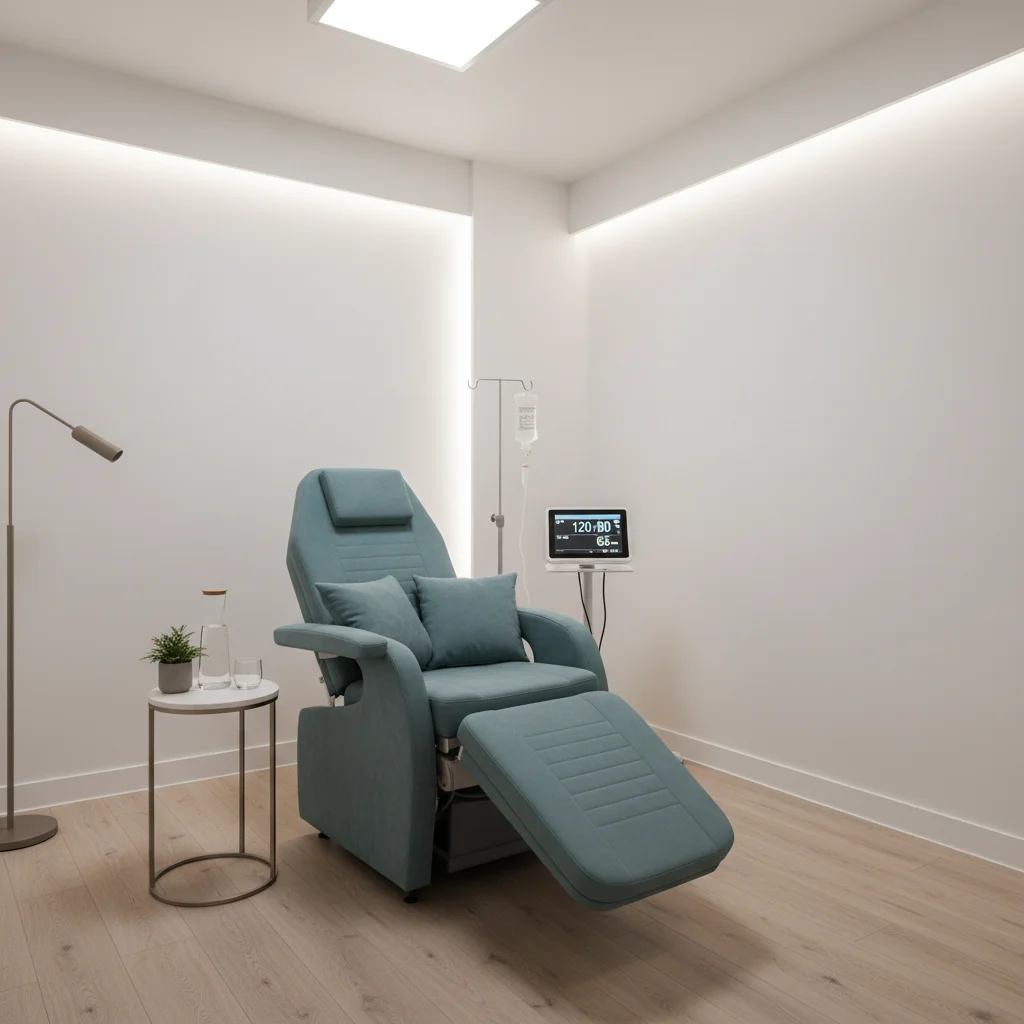
If you are considering ketamine therapy, you have probably searched for what can go wrong. That is a reasonable thing to do before any medical treatment, and the answer here is mostly reassuring: ketamine's side effects are well understood, usually mild, and almost always temporary.
The most common effects — dissociation, nausea, dizziness, drowsiness, and a temporary increase in blood pressure — happen during or shortly after treatment and typically resolve within a few hours. Serious complications are rare at the doses used for depression, anxiety, PTSD, and chronic pain, and they become rarer still when treatment happens in a properly supervised clinic.
Here is a practical breakdown of what to expect, how long it lasts, who needs to be more careful, and what should actually concern you.
Common side effects
These are the effects that most patients experience at some point during ketamine therapy. None of them are signs that something has gone wrong.
Dissociation. This is the most distinctive part of the ketamine experience. Patients describe it as feeling floaty, dreamlike, or temporarily detached from their body or surroundings. Some notice altered perception of time, brighter or duller colors, or a sense of watching themselves from a distance. Dissociation is an expected effect of how ketamine works in the brain — it is not a complication. It peaks during the session and fades within one to two hours afterward.
Nausea. Roughly 10 to 15 percent of patients experience nausea, usually after the session rather than during it. Ketamine stimulates the vestibular system — the part of your inner ear that controls balance — which is one reason it can make your stomach uneasy. The most effective prevention is fasting for four to six hours before treatment. Many clinics also prescribe an anti-nausea medication like ondansetron (Zofran) to take beforehand.
Dizziness and lightheadedness. Common during and immediately after treatment. It usually clears within a few hours. Avoid sudden movements when getting up, and stay seated until the clinic staff say you are ready.
Drowsiness and fatigue. Feeling tired or mentally slowed after a session is normal. Some patients feel this into the next day, though most are back to baseline after a good night of sleep.
Headache. Roughly 20 percent of patients report a headache after treatment. It is usually mild and responds to hydration and over-the-counter pain relievers, if your provider approves them.
Blood pressure and heart rate increase. Ketamine temporarily stimulates your nervous system in a way similar to adrenaline, which raises blood pressure and heart rate during the session. A Yale Psychiatry study found that systolic blood pressure increased by an average of about 16 mmHg during IV infusion, peaking around 40 minutes in and returning to normal within two hours. Clinics monitor your vitals throughout treatment and can intervene if the numbers go too high.
How long side effects last
One of the most reassuring things about ketamine therapy is the timeline. The side effects and the therapeutic benefits operate on completely different schedules — the side effects are short, while the mood and pain relief can last much longer.
| Effect | Typical duration |
|---|---|
| Dissociation / floating | During session, fades within 1–2 hours after |
| Nausea | A few hours after treatment |
| Dizziness | Same day, usually within hours |
| Blood pressure elevation | Peaks ~40 minutes during IV, back to baseline within 2 hours |
| Drowsiness / fatigue | A few hours to next day |
| Headache | Usually less than 24 hours |
| Brain fog | Typically gone by the next morning |
| Emotional sensitivity | Hours to 1–2 days |
If you are wondering about the therapeutic effects: a single infusion may provide relief lasting days to weeks, and a standard series of six infusions often produces benefits lasting weeks to months.
During the session
The effects you will notice most during treatment are dissociation, possible nausea or anxiety, and a temporary increase in blood pressure.
Dissociation is nearly universal at therapeutic doses. Most patients find it calm or even pleasant — a kind of vivid daydream where the outside world feels quieter. A minority find it disorienting, especially during their first session. If it becomes uncomfortable, tell your care team. They can slow or pause the infusion, and the feeling will begin to fade.
Anxiety during treatment occurs in roughly 20 to 30 percent of patients. This is distinct from the dissociation itself — it is more of a feeling of unease or nervousness. Clinics can adjust the infusion rate, change the room environment, or in some cases administer a medication to help. You should not try to wait out genuine distress in silence. That is what the staff is there for.
Blood pressure is monitored continuously throughout your session. If it rises too much, the clinic has protocols to manage it — including slowing the infusion or using medication to bring it down. For most patients, the increase is mild and resolves on its own.
After the session
Once treatment is finished, you will stay at the clinic for an observation period — typically 30 minutes to an hour for IV or IM ketamine, and a mandatory two hours for Spravato (esketamine nasal spray), per FDA requirements.
Most people leave feeling groggy, tired, or slightly off — similar to waking from a deep nap. Mild dizziness, fatigue, or brain fog can linger for the rest of the day. Some patients experience increased emotional sensitivity, vivid dreams that night, or a reflective mood in the 24 hours following treatment. These are not cause for concern and are often part of the therapeutic process.
What to avoid for the rest of the day:
- Driving. Not negotiable. Arrange a ride before your appointment. For Spravato, the FDA says no driving until the next day after a restful sleep. The same practical rule applies to IV and IM ketamine.
- Work and important decisions. Your thinking and reaction time may be impaired even if you feel mostly fine. Keep your schedule clear.
- Alcohol and recreational substances. Avoid both for at least 24 hours before and after treatment.
By the following morning, most people feel back to normal.
Ketamine and blood pressure
Because blood pressure is one of the more medically significant effects, it is worth understanding in a bit more detail.
Ketamine causes a temporary increase in blood pressure, heart rate, and cardiac output by stimulating the nervous system to release its own adrenaline-like chemicals. This effect is dose-dependent and generally mild to moderate at the lower doses used for psychiatric treatment. For most patients, there is no evidence of clinically significant heart damage from these transient changes.
Who needs extra caution:
- Uncontrolled high blood pressure is a contraindication — meaning you should not receive ketamine until it is under control.
- Recent heart attack, severe coronary artery disease, aortic aneurysm, or prior stroke — these are also contraindications because even a brief blood pressure spike could be dangerous.
- Congestive heart failure or pulmonary hypertension may be worsened by the cardiovascular stimulation.
- Patients over 50 or those with thyroid conditions may warrant additional cardiac monitoring.
If you have a cardiovascular history, the right approach is not to rule out ketamine automatically, but to ensure your clinic consults with a cardiologist before treatment and monitors you closely throughout.
Rare but serious risks
Serious adverse events are uncommon at the doses used in supervised therapeutic settings. But patients and their families should know what to watch for.
Emergence reactions. A temporary period of confusion, vivid dream-like states, or agitation as the medication wears off. The FDA notes this occurs in approximately 12 percent of patients at higher anesthetic doses — it is less common at the lower doses used for depression. It typically resolves within a few hours, and clinics can manage it with medication if needed.
Respiratory depression. Very rare at therapeutic doses, but possible at higher doses or when ketamine is combined with other sedating medications like opioids or benzodiazepines. This is one of the primary concerns with unsupervised at-home ketamine use, where no medical professional is present to intervene.
Liver injury. The FDA has flagged drug-induced liver injury as a risk associated with ketamine, primarily in the context of chronic or heavy use. Reputable clinics address this by running baseline liver function tests before starting treatment and monitoring them periodically for patients on extended protocols.
Bladder and urinary problems. This has been documented primarily in people who use ketamine very frequently over long periods — studies of heavy recreational users report bladder symptoms in 26 to 30 percent of that population. Standard-frequency clinical use does not carry the same risk, but patients on prolonged treatment courses should report any urinary changes to their provider.
Psychological dependence. Possible with repeated unsupervised or high-frequency use, but rare in structured clinical programs with appropriate oversight.
A note on at-home ketamine
The safety profile described above assumes treatment in a supervised clinical setting. At-home ketamine programs — where patients receive sublingual or oral ketamine shipped to them with remote telehealth oversight — operate under meaningfully different conditions.
In 2023, the FDA issued an explicit warning about compounded ketamine products, the type typically used in at-home programs, citing risks including dissociation, respiratory depression, and blood pressure changes — all in a context where no medical professional is physically present to respond. Compounded ketamine products have not been evaluated by the FDA for safety and efficacy.
That does not mean every at-home program is dangerous. But the absence of in-person monitoring during treatment is a real difference in the risk profile, and patients should understand it before choosing between in-clinic and at-home care.
Who should use extra caution
Ketamine is generally not recommended for people with:
- Known allergy or hypersensitivity to ketamine
- Uncontrolled hypertension
- Recent heart attack or severe coronary artery disease
- Aortic aneurysm or history of stroke
- Active psychosis or schizophrenia
- Pregnancy or breastfeeding
Extra screening is needed (but not automatic exclusion) for:
- Controlled hypertension on medication
- History of substance misuse — evaluate on a case-by-case basis, not an automatic disqualification
- Liver disease — baseline enzyme levels should be checked
- Obstructive sleep apnea
- Poorly controlled bipolar disorder
- Patients on MAOIs or certain blood pressure medications — drug interaction review required
If a loved one has any of these conditions, the right step is not to avoid ketamine entirely, but to make sure the clinic conducts a full medical intake and consults with relevant specialists before treatment.
How clinics reduce risk
A well-run ketamine clinic has layers of safety built into the process. Understanding what those look like can help you evaluate providers.
Before treatment: A reputable clinic will conduct a full medical history review, psychiatric evaluation, and baseline lab work — including liver function tests, a metabolic panel, and sometimes an ECG. They will review all of your current medications and allergies, screen for contraindications, and obtain informed consent that explains expected effects and emergency protocols.
During treatment: Your vital signs — blood pressure, heart rate, oxygen saturation, and level of consciousness — are monitored continuously. A trained clinician or nurse is present throughout. The clinic has access to emergency medications including drugs to manage blood pressure spikes, anxiety, and emergence reactions, and the infusion can be slowed, paused, or stopped at any point.
After treatment: You are observed until the staff determines you are stable enough to leave. You must have a ride home arranged — no driving. The clinic schedules follow-up appointments and provides aftercare instructions.
The American Psychiatric Nurses Association publishes a ketamine infusion therapy checklist outlining these standards. If a clinic skips the medical intake, does not monitor you during sessions, or does not require a driver, look elsewhere.
How to prepare and recover
A few practical steps can meaningfully reduce your chance of side effects:
Before your session:
- Fast for four to six hours (small sips of water are usually fine up to two hours before — confirm with your clinic)
- Avoid alcohol for at least 24 hours
- Get a full night of sleep
- Wear comfortable, loose-fitting clothes
- Arrange a ride home in advance
During:
- If the clinic offers headphones with calming music or an eye mask, use them
- Breathe slowly if the experience becomes uncomfortable
- Tell the staff immediately if you feel too anxious or unwell
After:
- Rest for the remainder of the day
- Stay hydrated — water and electrolyte drinks
- Eat light, easy-to-digest meals
- Do not drive, operate machinery, or make important decisions
- Note any mood or physical changes to share with your provider at follow-up
When to call a doctor
Most side effects are expected and manageable. But certain symptoms warrant a call to your provider or a trip to the emergency room.
Contact your provider the same day if:
- Nausea, dizziness, or headache that persists well beyond treatment and is not improving with rest and hydration
- Unusual difficulty urinating or blood in urine
- Severe or unusual mood changes
- Dissociation that has not resolved hours after the session ended
- Any thoughts of self-harm
Call 911 or go to the ER if:
- Chest pain
- Trouble breathing or slow, shallow breathing
- Sudden severe headache
- Loss of consciousness
- Signs of stroke — sudden confusion, facial drooping, arm weakness, vision changes
- Signs of allergic reaction — hives, throat swelling, difficulty swallowing, wheezing
- Signs of liver injury — yellowing of skin or eyes, dark urine, severe right-sided abdominal pain
- Seizure
These are rare, especially in a supervised clinical setting. But knowing the signs means you can act quickly if they occur.
Frequently asked questions
What are the most common ketamine side effects? Dissociation (a floaty or dreamlike feeling), dizziness, nausea, drowsiness, and a mild temporary increase in blood pressure. These are well-documented, expected, and resolve within hours of treatment.
How long do ketamine side effects last? Most side effects clear within one to three hours after the session ends. Fatigue or mild brain fog may last into the next day but is usually gone after a good night of sleep.
Does ketamine raise blood pressure? Yes. Ketamine causes a temporary, usually mild increase in blood pressure during treatment. It typically peaks around 40 minutes into an IV infusion and returns to baseline within two hours. Clinics monitor blood pressure throughout and intervene if needed.
Is ketamine safe if I have high blood pressure? Uncontrolled high blood pressure is a contraindication for ketamine therapy. If your blood pressure is well-controlled with medication, treatment may still be possible with extra monitoring — discuss this with a ketamine provider and your cardiologist.
Can ketamine therapy cause addiction? Psychological dependence is possible but rare in structured clinical programs with proper oversight. Risk increases with unsupervised use and high-frequency self-administration outside of a medical context.
How can I reduce nausea before ketamine treatment? Fast for four to six hours before your session. Ask your provider about an anti-nausea medication like ondansetron (Zofran) to take beforehand. These two steps eliminate nausea for most patients.
Who should not get ketamine therapy? People with uncontrolled high blood pressure, active psychosis or schizophrenia, serious cardiovascular disease (recent heart attack, aortic aneurysm, stroke), or who are pregnant. Other conditions require extra screening but are not automatic disqualifications.
Is Spravato safer than IV ketamine? Spravato (esketamine) is FDA-approved and requires mandatory in-office monitoring for at least two hours after each dose. IV ketamine is off-label but also delivered under close clinical supervision with continuous vital sign monitoring. Both are significantly safer than unsupervised at-home models.
Finding a provider
If you are looking for a ketamine therapy provider with thorough screening and supervised care, our directory lists clinics across the country. You can browse by location, clinic type, or condition treated to compare providers near you.
Related articles
- How Much Does Ketamine Therapy Cost?
- Does Insurance Cover Ketamine Therapy?
- What Does Ketamine Therapy Feel Like?
Sources
- Mayo Clinic. Ketamine (Injection Route) — Side Effects.
- Mayo Clinic. Esketamine (Nasal Route) — Side Effects.
- Cleveland Clinic. Ketamine: Uses, Interactions & Side Effects.
- FDA. Spravato (Esketamine) Prescribing Information. 2025 label.
- FDA. Potential Risks Associated with Compounded Ketamine Products.
- FDA. FDA Warns Patients and Health Care Providers About Potential Risks Associated with Compounded Ketamine. October 10, 2023.
- NIH/NCBI StatPearls. Ketamine — Pharmacology and Contraindications.
- Loo, C. et al. (2017). Factors Influencing the Cardiovascular Response to Subanesthetic Ketamine. International Journal of Neuropsychopharmacology. Oxford Academic.
- Sener, S. et al. (2021). Effect of Ketamine on Cardiovascular Function During Procedural Sedation. PMC. PubMed Central.
- Sayad, R. et al. (2025). Safety Considerations and Risk Mitigation Strategies for Ketamine. PMC. PubMed Central.
- Elsevier/ClinicalKey. Cardiovascular Effects of Ketamine.
- American Society of Anesthesiologists. One in Three Pain Patients Suffer Side Effects After Ketamine Infusion Therapy. ASA Annual Meeting, 2019.
- APNA. Ketamine Infusion Therapy Considerations Checklist.
- AANA. Ketamine Infusion Therapy Checklist.
- Memorial Sloan Kettering Cancer Center. Ketamine — Patient Education.
- GoodRx. Ketamine Side Effects for Depression.
- UK Government. Ketamine: An Updated Review of Use and Harms.
Ketamine Therapy Directory Editorial Team
Content is researched using peer-reviewed medical literature, FDA publications, and clinical guidelines. This article is for informational purposes only and does not constitute medical advice. Always consult a qualified healthcare provider.