What Does Ketamine Therapy Feel Like?
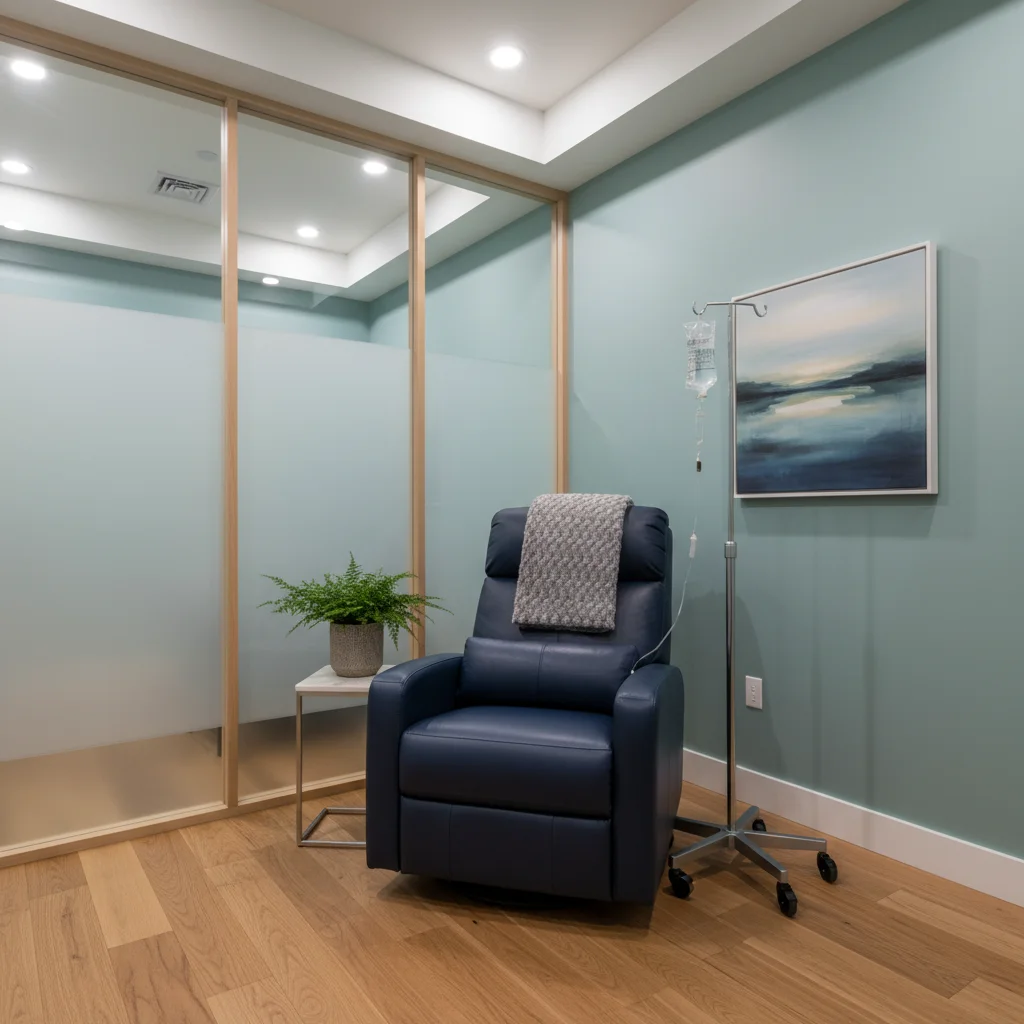
If you are considering ketamine therapy, one of the biggest unknowns is what the experience is actually like. Not the clinical studies or the marketing copy — what it feels like to sit in the chair, receive the treatment, and go home afterward.
The short answer is that most people describe it as unusual but temporary. Many patients feel dream-like, floaty, or mentally detached for a period during and after treatment. Some find it calming. Others find it strange or disorienting. A few feel anxious or nauseated. There is no single "normal" ketamine experience — it varies by person, dose, route, clinic setup, and why you are being treated.
What is consistent is that in a legitimate medical setting, you are monitored the entire time, the altered state is short-lived, and the staff are there specifically to keep you safe and comfortable. You are not left alone to figure it out.
Here is what to expect before, during, and after a ketamine therapy session.
Before the session
Screening and intake
Before your first treatment, you will go through a screening process. This usually includes a review of your medical history, mental health history, current medications, and the reasons you are seeking treatment. Some clinics order lab work or ask for clearance from another provider. The goal is to make sure ketamine therapy is safe for you and to identify anything that might affect how you respond.
This screening may happen at a separate intake appointment or on the same day as your first session, depending on the clinic. Either way, expect questions about your physical and mental health that go beyond what a typical doctor visit covers.
Food and drink
Most clinics will ask you to avoid eating for at least two hours before treatment and to stop drinking liquids at least 30 minutes beforehand. For Spravato, these instructions come directly from the FDA labeling. For IV ketamine, clinics follow similar guidelines. The main reason is reducing the chance of nausea, which is one of the more common side effects.
If you take nasal medications like decongestants or steroid sprays, ask your clinic about timing — for Spravato, the recommendation is to use those at least one hour before your session.
Arrange a ride home
This is not optional. You should not plan to drive yourself home after ketamine therapy. The treatment can slow your thinking, affect your coordination, and impair your reaction time for hours afterward. For Spravato, the FDA label is explicit: no driving or operating machinery until the next day after a restful sleep. For IV ketamine, the guidance is the same in practice — arrange a driver, a rideshare, or someone to pick you up.
Plan your day around this. Treatment days are not the days for work, important decisions, or anything that requires you to be sharp.
During the session
Check-in and setup
When you arrive, the clinic will typically have you fill out a brief symptom questionnaire and review how you have been feeling since your last visit (or, for a first session, since your screening). A nurse or clinician will check your vital signs — blood pressure, heart rate, oxygen saturation — and get you settled.
For IV ketamine, an IV line is placed, usually in your arm or hand. For Spravato, you self-administer the nasal spray under the direct supervision of a clinician. For IM ketamine, you receive an injection, usually in the upper arm or thigh.
The treatment room is usually kept calm and quiet. Many clinics encourage patients to listen to music, wear an eye mask, or simply close their eyes and rest. The environment can affect how the experience feels, and most clinics try to keep it low-stimulus.
How long a session takes
For IV ketamine, the infusion itself typically runs about 40 minutes. The total visit, including setup, monitoring during treatment, and observation afterward, usually takes two to three hours.
For Spravato, the drug administration is faster, but the FDA requires at least two hours of post-dose monitoring before you can leave. Expect the full appointment to take about two to two and a half hours.
For IM injections, the session is generally shorter than IV but still includes about an hour of post-treatment observation.
What you will be monitored for
Throughout your session, staff will check your vital signs — blood pressure, heart rate, oxygen levels, and level of consciousness. They are also watching for dissociative effects, which are expected at therapeutic doses but need to be tracked. If your blood pressure rises — which is common, especially with Spravato — they will monitor it until it stabilizes. For Spravato, blood-pressure increases typically peak around 40 minutes after dosing and can last about four hours.
You are not left alone during this process. Someone is there.
What ketamine therapy feels like
This is the part most people want to know about, and it is the hardest to pin down because experiences vary so much. But here is what patients and clinical sources commonly describe.
Dream-like or floaty. Many people describe a sensation of floating, drifting, or feeling like they are in a vivid dream. You are usually awake, but your mental state feels altered — as if the volume on the outside world has been turned down.
Detached or disconnected. Some people feel temporarily separated from their body, their thoughts, or their surroundings. This is the "dissociation" that clinical sources refer to. It can feel like watching yourself from a distance, or like your sense of time and space has shifted.
Sensory changes. Colors, sounds, or light may seem more vivid or different than usual. Some people experience closed-eye visuals. Others notice tingling, numbness, or a warm sensation in their body.
Relaxed or emotionally open. Some patients describe feeling unusually calm, reflective, or emotionally present. Others mainly feel physically odd or sleepy without much emotional content at all.
Dizzy, nauseated, or anxious. Not everyone has a pleasant experience. Dizziness, nausea, and anxiety are among the more common side effects. Some people feel "drunk" or off-balance. These effects are temporary, and clinic staff can often help manage them if they become uncomfortable.
The important thing to know is that none of these experiences are permanent. They typically peak within 15 to 45 minutes of treatment and fade over the next one to two hours. By the time you leave the clinic, the most intense effects have usually passed.
If something feels wrong or distressing during your session, tell the staff. That is what they are there for. Feeling unusual is expected. Feeling like you are in distress is not something you should just wait out silently.
After the session
When the treatment portion is over, you will stay at the clinic until the staff determine you are stable enough to leave. For Spravato, that means at least two hours of observation. For IV and IM ketamine, the observation period varies by clinic but is usually 30 minutes to an hour after the infusion ends.
How you will likely feel leaving the clinic
Most people describe the post-treatment feeling as groggy, tired, or slightly off — like waking up from a deep nap or a vivid dream. Mild dizziness or fatigue can linger for the rest of the day. You may feel mentally slowed or spacey for a few hours after you get home.
This is normal. It does not mean something went wrong.
What to avoid for the rest of the day
- Driving. Do not drive. For Spravato, the FDA says no driving until the next day after a restful sleep. For IV ketamine, the same practical rule applies.
- Work. Cleveland Clinic explicitly advises against working on treatment days. If you can, keep your schedule clear.
- Major decisions. Signing documents, having important conversations, or making financial decisions should wait. Your judgment and reaction time may be impaired even if you feel mostly fine.
- Heavy machinery or physical activity. Anything that requires coordination or quick reflexes is off the table for the day.
The best plan is to go home, rest, eat something light, and take it easy. Many patients find the rest of the day uneventful — they just feel tired and want to relax.
The next day
Most people feel mostly back to normal by the following day. The grogginess and mental fog from the session itself have usually cleared after a good night of sleep.
That said, consider keeping your morning flexible after your first session or two. Individual recovery varies, and until you know how you personally respond, a lighter schedule is a reasonable precaution. Some people feel completely fine the next morning. Others feel a little off for part of the day.
When will I know if it is working?
This is a separate question from "when will I feel normal again." The treatment effects — the floaty, detached feeling — wear off within hours. But the clinical benefits, if they come, operate on a different timeline.
Some people notice an improvement in mood or pain relatively quickly, sometimes within hours or days of their first session. Others do not notice a meaningful change until several sessions into the initial series. And even when benefits come quickly, they can fade within days or weeks, which is why maintenance sessions are typically part of the treatment plan.
Do not assume the treatment did not work just because you do not feel different the next day. And do not assume it definitely worked just because the strange feelings wore off and you feel better than you did during the session. The clinical picture becomes clearer over the course of treatment, not after a single session.
What to bring and how to prepare
A few practical things that can make the experience smoother:
- ID and insurance information if applicable
- A list of your current medications
- Comfortable, loose-fitting clothes — you will be sitting or reclining for a while
- Headphones and a music playlist if your clinic allows it (many do)
- An eye mask if you prefer to block out light
- Water and a light snack for after the session — check with your clinic about what is allowed
- A confirmed ride home — have this arranged before you arrive
Leave space in your schedule afterward. Do not book the session between two commitments. Treat the rest of the day as recovery time.
Questions to ask your clinic before booking
Not every clinic runs the same way, and asking a few questions upfront can help you feel more prepared and avoid surprises:
- What route do you use (IV, IM, nasal spray), and why?
- Who monitors me during treatment, and for how long afterward?
- What are your specific fasting and medication instructions?
- What side effects do you commonly see, and how do you manage them?
- What should I plan for the rest of the day and the next day?
- What should I do if I feel worse or very anxious afterward?
- Do I need someone to stay with me at home, or just a ride?
If a clinic downplays monitoring, dismisses your questions about side effects, or does not ask about your medical history before treating you, that is a reason to look elsewhere.
What varies across treatment types
It is worth noting that not all ketamine therapy is the same experience. The route of administration — IV, IM, nasal spray, oral, or sublingual — affects how quickly the drug takes effect, how intense the experience feels, and how long the session lasts.
IV ketamine is the most commonly described in clinical literature. It provides a controlled, steady dose over about 40 minutes and is the most widely studied for depression and pain.
Spravato (esketamine nasal spray) is the only FDA-approved ketamine-based treatment for depression. It follows a more standardized protocol — same drug, same route, same monitoring requirements at every certified clinic.
IM ketamine is less common but used at some clinics. The onset is faster than IV, and the session is often shorter.
At-home oral or sublingual ketamine is offered through some telehealth programs. The experience is generally milder than IV or IM, but it comes with less direct supervision. The FDA has issued safety warnings about compounded ketamine products used at home without onsite monitoring, citing risks including sedation, dissociation, blood-pressure changes, and respiratory depression.
What you read about one person's experience at one type of clinic may not match what happens at another. Ask your provider what to expect for the specific treatment they offer.
Frequently asked questions
What does ketamine therapy feel like? Most people describe it as dream-like, floaty, or detached — like being in a vivid daydream where your sense of time and space shifts. Some feel relaxed. Others feel dizzy, nauseated, or anxious. The experience varies by person and treatment type, but it is temporary and monitored.
How long does the ketamine feeling last? The most intense effects typically peak within 15 to 45 minutes and fade over the next one to two hours. Mild grogginess or fatigue can last the rest of the day. Most people feel back to normal by the next day.
Can I drive after ketamine therapy? No. Arrange a ride home. For Spravato, the FDA requires no driving until the next day after a restful sleep. For IV and IM ketamine, the same practical rule applies.
Can I work after ketamine therapy? You should not plan to work the same day. Cleveland Clinic advises against work on treatment days because thinking and reaction time can be slowed. The next day, most people can return to normal activities after a good night of sleep, but consider a lighter schedule after your first session.
What should I eat before ketamine therapy? Most clinics ask you to avoid food for at least two hours and liquids for at least 30 minutes before treatment. This helps reduce nausea. Follow your clinic's specific instructions.
Is the experience the same every time? Not necessarily. Dose, route, your physical state, your stress level, and even what you ate can all affect how a session feels. Some sessions may feel more intense than others, and that is normal.
What if I feel anxious or scared during the session? Tell the staff. They are trained to help. Feeling unusual is expected, but you should not white-knuckle through genuine distress. The care team can adjust your comfort, talk you through it, or intervene if needed.
Finding a provider
If you are looking for a ketamine therapy provider, our directory lists clinics across the country. You can browse by location, clinic type, or treatment approach to find providers near you.
Related Articles
Sources
- Cleveland Clinic. Ketamine Therapy. Last updated January 16, 2026.
- FDA. Spravato (Esketamine) Prescribing Information. 2025 label.
- McLean Hospital. Ketamine Service.
- Veterans Health Library. Esketamine Nasal Spray.
- UNC Department of Psychiatry. Esketamine.
- APNA. Ketamine Infusion Therapy Considerations Checklist. Updated August 2023.
- FDA. FDA Warns Patients and Health Care Providers About Potential Risks Associated with Compounded Ketamine Products. October 10, 2023.
- Andrade, C. (2017). Ketamine for Depression, 4: In What Dose, at What Rate, by What Route, for How Long, and at What Frequency? Journal of Clinical Psychiatry. PubMed.
- Sanacora, G. et al. (2017). A Consensus Statement on the Use of Ketamine in the Treatment of Mood Disorders. JAMA Psychiatry. PubMed.
Ketamine Therapy Directory Editorial Team
Content is researched using peer-reviewed medical literature, FDA publications, and clinical guidelines. This article is for informational purposes only and does not constitute medical advice. Always consult a qualified healthcare provider.